Mechanical
Timing Belt and Timing Chain Replace
Auckland’s engine timing specialists. Galeeco Automotive replaces dry timing belts, timing chains and wet timing belts (belt-in-oil systems) for all makes and models — including Ford Ranger and Ford Transit — at our MTA-approved workshops in Mt Wellington and Mt Roskill. Don’t wait until it’s too late. A broken timing belt can write off your engine in seconds.
What Is a Timing Belt — and What Is a Wet Timing Belt?
A timing belt is a reinforced rubber belt that synchronises the rotation of your engine’s crankshaft and camshaft. When it works correctly, your engine runs smoothly and efficiently. When it fails, the consequences are immediate and expensive.
There are two types of timing belt systems in modern vehicles:
Dry Timing Belt: The traditional system, where the belt runs in a dry environment, enclosed in a protective cover. Found in the vast majority of petrol and diesel vehicles produced before 2015.
Wet Timing Belt (Belt-in-Oil System): A newer design where the timing belt is submerged in engine oil. This system is quieter, more compact and — when properly maintained — highly durable. However, it requires specialist knowledge and stricter adherence to replacement intervals. Failing to replace a wet belt on schedule is one of the most common causes of catastrophic engine failure we see at Galeeco.
Which vehicles in New Zealand use a wet timing belt?
The most common vehicles in the NZ market using a belt-in-oil system include:
- Ford Ranger 2.0L Bi-Turbo (PXIII, 2018 and newer) — extremely common in NZ
- Ford Transit 2.0L EcoBlue (2018 and newer)
- Some Honda 1.5L and 1.6L diesel engines
- Some Renault and PSA-group diesels
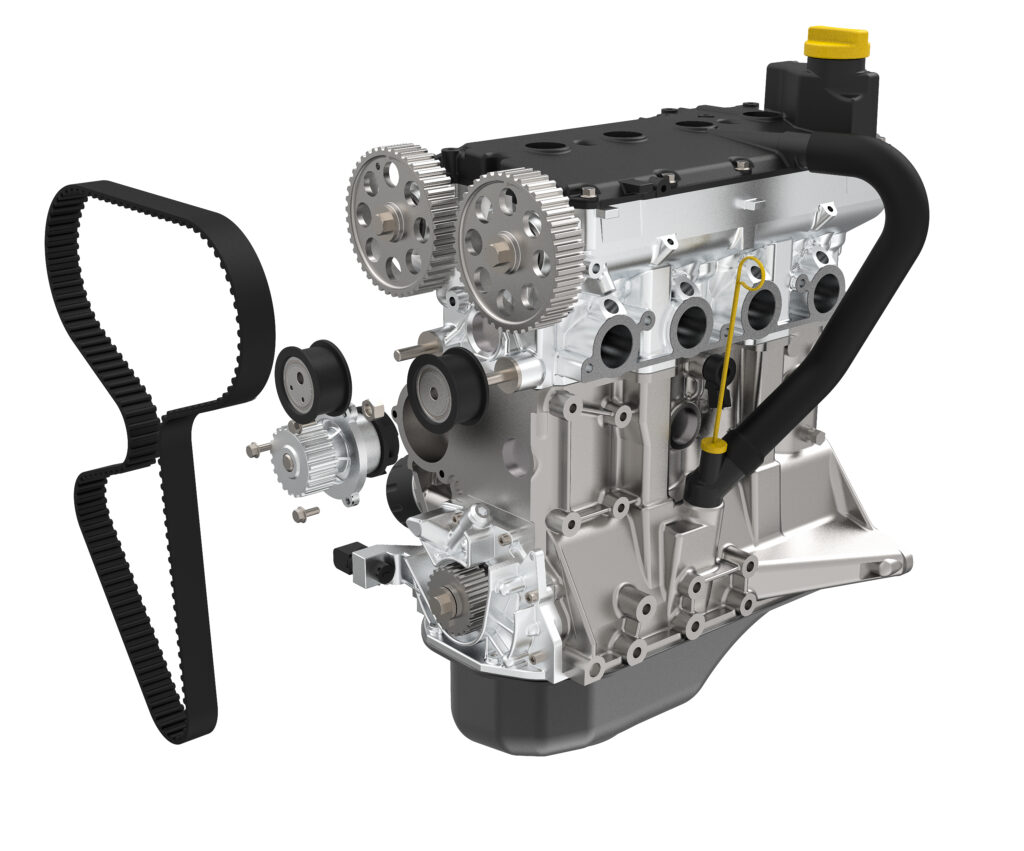
Signs your cam belt may need replacing
Ticking noise from the engine
Engine misfiring or rough idling
Difficulty starting
Visible wear or cracks in the belt
Lack of recent service history
Timing Belt vs Timing Chain — Which Does My Vehicle Have?
Not sure which system your vehicle uses? Here’s a quick reference for common NZ vehicles:
| System | Common NZ Vehicles |
|---|---|
| Dry Timing Belt | Ford Transit 2.2L Duratorq, Mazda 6 2.5 petrol, Honda Jazz, Subaru EJ series, Toyota Avensis 2.0D |
| Wet Timing Belt | Ford Ranger 2.0L Bi-Turbo (2018+), Ford Transit 2.0L EcoBlue (2018+) |
| Timing Chain | Ford Ranger 3.2L Duratorq, Toyota Hilux 2.8L 1GD, Nissan Navara 2.3L dCi, Mitsubishi Triton 2.4D, Mazda CX-5 2.2L SkyActiv-D |
Important: Timing chains are often marketed as “maintenance-free,” but this is misleading. A stretched chain, worn tensioner or failing chain guide can be just as catastrophic as a snapped belt. If your vehicle has a timing chain and you’re hearing rattling at start-up or under load, book a diagnostic immediately.
Ford Ranger Timing Belt & Timing Chain Replacement Auckland
The Ford Ranger is New Zealand’s best-selling vehicle — and also one of the most important when it comes to timing service. Here’s what you need to know depending on your generation:
Ford Ranger 3.2L Duratorq — PX1, PX2 (2011–2018): Timing Chain
The 3.2L five-cylinder Duratorq diesel in the older Ford Ranger uses a timing chain rather than a belt. While chains are generally longer-lasting, this engine is known for:
- Timing chain rattle at cold start, particularly from 150,000 km+
- Worn chain tensioners and plastic guides
- Accelerated wear if oil change intervals are exceeded
If you’re driving a pre-2018 Ford Ranger 3.2L and hearing any rattling from the front of the engine at start-up, do not ignore it. A chain replacement on this engine, while significant work, is far less expensive than an engine rebuild.
Ford Ranger 2.0L Bi-Turbo — PXIII (2018+): Wet Timing Belt — CRITICAL
This is the engine we see most commonly in our workshops for timing-related issues. The Ford Ranger 2.0L Bi-Turbo EcoBlue uses Ford’s belt-in-oil (wet timing belt) system, and it has very specific service requirements:
- Replacement interval: 150,000 km or 10 years (whichever comes first)
- Belt type: Specialist belt-in-oil system — standard belt kits will NOT work
- Oil quality matters: Using incorrect engine oil accelerates belt wear
- Symptoms of wear: Rough idle, engine misfires, increased fuel consumption, rattling from timing cover, oil contamination
⚠️ Critical Warning: Ford Ranger owners frequently underestimate this service. Because the belt runs in oil and is enclosed, there are no visible signs of wear until failure is imminent. Galeeco strongly recommends proactive replacement at or before the manufacturer interval.
Galeeco’s Ford Ranger wet timing belt service includes full belt replacement, new tensioner, inspection of all associated components, oil and filter change, and a post-installation road test and diagnostic scan. We stock specialist wet belt kits for Ford Ranger at both our Mt Wellington and Mt Roskill workshops.
Ford Transit Timing Belt Replacement Auckland
The Ford Transit is New Zealand’s most popular light commercial van — a workhorse for tradespeople, couriers, fleet operators and small businesses. Getting your timing belt service right is essential for business continuity.
Ford Transit 2.2L Duratorq — Dry Timing Belt
This engine, found in Transit vans up to approximately 2017, uses a conventional dry timing belt. Recommended replacement interval: every 100,000–125,000 km or 5 years, whichever comes first. Components typically replaced include: the timing belt, automatic tensioner, idler pulleys, and the water pump (which is driven by the timing belt on this engine and should always be replaced at the same time).
Ford Transit 2.0L EcoBlue — Wet Timing Belt (2018+)
Like the Ford Ranger 2.0L Bi-Turbo, newer Ford Transit vans with the EcoBlue engine use a wet timing belt system. Replacement interval: 150,000 km or 10 years. This is not a standard belt replacement — it requires specialist tooling, the correct oil-resistant belt, and a full timing check post-installation.
For fleet operators: If you run Ford Transit vans as part of a fleet, Galeeco’s fleet servicing team can manage timing belt schedules across your entire vehicle pool. Contact us for a fleet maintenance consultation → Fleet Servicing
Our Cam Belt Replacement Service Includes
New cam (timing) belt installation
Replacement of tensioners, pulleys, and water pump (if required)
Engine timing calibration
Full safety check and service report
Quality parts with warranty
We use OEM or equivalent quality parts to ensure long-lasting reliability.
Signs Your Timing Belt or Chain Needs Replacing
Watch for these warning signs across all vehicle types:
- 🔴 Rattling or ticking from the engine — especially at cold start or under acceleration
- 🔴 Rough idle or engine misfires — may indicate timing has slipped
- 🔴 Engine warning light — particularly codes relating to camshaft/crankshaft position sensors
- 🔴 Oil leak near timing cover — on wet belt systems, this may indicate seal failure leading to belt contamination
- 🟡 Exceeded service interval — you’ve passed the manufacturer’s recommended km or year limit
- 🟡 Visible belt wear — cracking, fraying or missing teeth on a dry belt (do NOT run this engine)
- 🟡 High fuel consumption — timing retardation can reduce fuel efficiency
- 🟡 Difficulty starting — especially in older engines with worn timing components
If you recognise any of these symptoms, stop driving the vehicle and call us immediately. Running an engine with a compromised timing belt or chain is high risk. The difference between catching it early and ignoring it can be the difference between a $700 belt service and a $12,000 engine rebuild.
Timing Belt Replacement Cost in Auckland — What to Expect
Timing belt replacement costs vary depending on vehicle make, model and which components are included in the service. Here’s a realistic NZ market guide:
| Vehicle Type | Typical Cost Range (NZD) | Notes |
|---|---|---|
| Small petrol car (Honda, Toyota, Subaru) | $400–$650 | Belt, tensioner, pulleys |
| European diesel (VW, Audi, BMW) | $600–$950 | Often includes water pump |
| Ford Transit 2.2L Duratorq | $550–$850 | Belt + water pump recommended |
| Ford Ranger 2.0L Bi-Turbo (wet belt) | $750–$1,200 | Specialist system, oil change included |
| Timing chain replacement (any engine) | $900–$2,500+ | Labour-intensive, varies widely |
What’s always included in our Galeeco timing belt service:
- New timing belt (OEM-specification or quality equivalent)
- New tensioner and idler pulleys
- Inspection of water pump (replacement recommended where belt-driven)
- Timing check and verification post-installation
- Road test and diagnostic scan
Cheapest isn’t safest when it comes to timing work. A substandard belt kit or incorrect installation can fail far sooner than the manufacturer’s interval. Galeeco uses only quality-specified parts and follows manufacturer procedures.
Why Choose Galeeco?
- MTA-approved workshops — Mt Wellington and Mt Roskill
- Ford specialists — proven experience with Ranger and Transit wet belt systems
- Diesel and petrol expertise — we service all makes and all engine types
- Quality-specification parts — no compromises on timing components
- Transparent pricing — free quote before any work begins
- Afterpay, Laybuy, Zip, WINZ quotes — payment flexibility for every customer
- Six-day availability — Mon–Fri 8am–5:30pm, Saturday 9am–5pm
Book Your Free Timing Belt Inspection Today
Don’t risk engine failure. Contact Galeeco Automotive for a free quote and expert assessment of your timing belt or chain.
📍 Mt Wellington — 65 Leonard Road, Mount Wellington, Auckland 1060
📞 022 472 4444 | Mon–Fri 8am–5:30pm | Sat 9am–5pm
📍 Mt Roskill — 87 Carr Road, Mount Roskill, Auckland 1041
📞 022 567 2249 | Mon–Fri 8am–5:30pm | Sat 9am–5pm
Frequently Asked Questions — Timing Belt & Chain Replacement Auckland
What is a wet timing belt and do I have one?
A wet timing belt (belt-in-oil system) runs submerged in engine oil rather than in a dry cover. It is found in Ford Ranger 2.0L Bi-Turbo (2018+), Ford Transit 2.0L EcoBlue (2018+), and some Honda diesel engines. If you drive a newer Ranger or Transit, you almost certainly have one. These systems require specialist service.
How often should I replace my Ford Ranger timing belt?
The Ford Ranger 2.0L Bi-Turbo (PXIII, 2018+) wet timing belt is due at 150,000 km or 10 years — whichever comes first. The older 3.2L Duratorq uses a timing chain that should be inspected from 150,000 km. Don’t wait for symptoms — this is a proactive service.
How often should I replace my Ford Transit timing belt?
Ford Transit 2.0L EcoBlue (2018+) uses a wet timing belt due at 150,000 km or 10 years. The older 2.2L Duratorq uses a dry belt due at 100,000–125,000 km or 5 years. Water pump replacement is strongly recommended at the same time on the Duratorq.
What happens if my timing belt breaks while driving?
Catastrophic engine damage occurs instantly. The pistons and valves collide, typically bending or breaking valves, damaging pistons, and sometimes destroying the cylinder head. Repair costs range from $5,000–$15,000+ NZD. Prevention through scheduled replacement is always the right decision.
How much does timing belt replacement cost in Auckland?
Costs range from approximately $400–$650 for smaller passenger cars, $550–$850 for Ford Transit Duratorq, and $750–$1,200 for Ford Ranger 2.0L wet belt systems. Contact Galeeco for a free, no-obligation quote specific to your vehicle.
Does Galeeco do timing belt replacement at Mt Roskill?
Yes. Our Mt Roskill workshop at 87 Carr Road specialises in timing belt and timing chain services for all vehicles, including Ford Ranger and Ford Transit wet belt systems. Call 022 567 2249 or book online.
great team
Our team of great mechanics and tow truck operators have a combined 20+ years of hands on experience.
amazing results
Every time you put your car in our hands you know you’ll get nothing short of amazing results back.
Competative Pricing
We won’t charge you an arm and a leg to get you back up and running – our rates are very reasonable,
Our
Services
Oil changes are one of the most important services to keep your vehicle on the road. One of the quickest and easiest services you can do to care for your vehicle is an oil change.
At our local auto repair shop, we have performed countless oil changes for our valued customers. Regularly performed oil changes ensure that your engine is not being forced to work overtime through dirty oil in order to run.
Diagnosing the Issue
Every manufacturer has different recommendations as to how often and at what mileage you should have your oil change done. Check your owner’s manual for the exact mileage your car’s maker recommends and don’t allow that mileage to pass without getting it done.
Neglecting an oil change will result in causing stress and unnecessary wear on your engine, which could cause it to stop running well before its time. Replacing an entire engine is a very costly repair to make as a result of failing to regularly change the oil.
best auto service
RATED ONE OF THE THE BEST AUTO service IN AUCKLAND
Based on customer reviews – 80+ reviews and counting.