Engine and transmission rebuild

Engine Rebuilds for All Makes & Models

Your Engine Is Telling You Something. The Question Is Whether You're Listening.

Galeeco Automotive — Auckland’s All-Makes Engine Rebuild Specialists at Mt Wellington & Mt Roskill


It started subtly. A knock that wasn’t there before. Oil that seems to disappear between services. A cloud of blue smoke on a cold start that clears after a few minutes — then one day doesn’t. A loss of power you’ve been explaining away for months.

Your engine doesn’t fail overnight. It gives warnings. Most people miss them, or park them in the “deal with later” drawer, until later arrives at the worst possible moment — on a motorway, at an intersection, in the middle of a job.

If you’re reading this page, later may have already arrived.

Galeeco Automotive has been rebuilding engines across all makes and models at Mt Wellington and Mt Roskill for Auckland drivers who want a straight answer: Is this engine worth rebuilding? What will it cost? How long will it take? What warranty do I get? And is a rebuild actually better than just replacing the car?

We answer all of those questions — honestly — before we quote a single dollar.

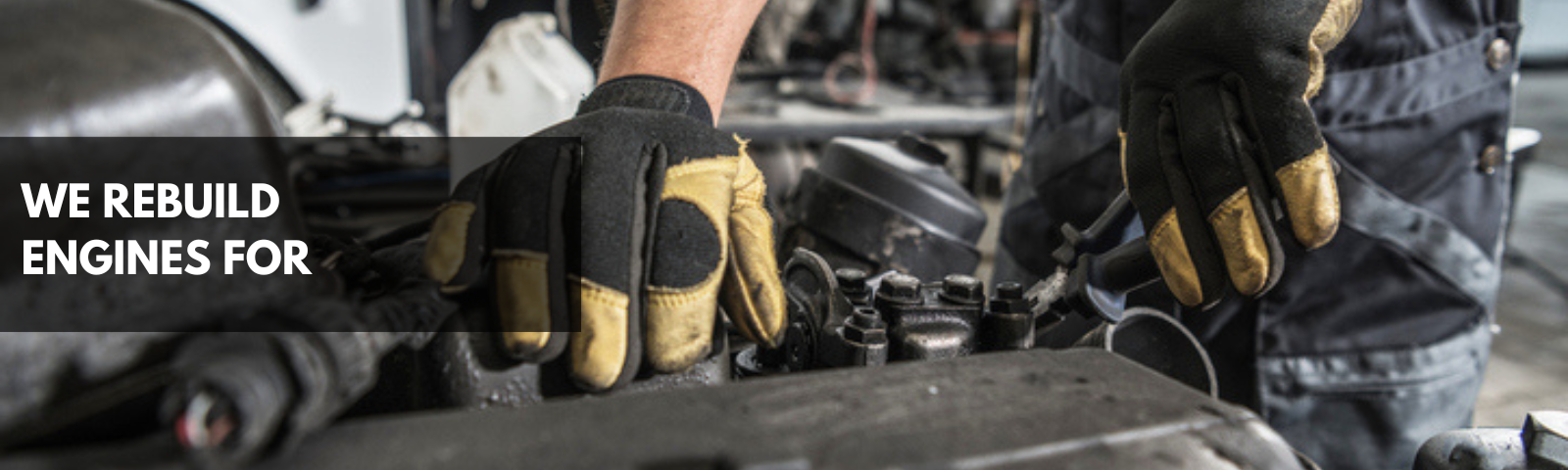
we Rebuild engines for -galeeco

Everything You Need to Know Before Rebuilding an Engine in Auckland


Is Your Engine Actually Blown? The Honest Diagnostic


Before we talk about rebuilds, let’s be direct: not every symptom means a rebuild is inevitable. Some faults that feel catastrophic are fixable without a full engine teardown. Others that seem minor are warnings of imminent terminal failure. Knowing the difference saves you from both premature write-offs and expensive surprises.

Here are the symptoms Galeeco sees on Auckland vehicles — and what they actually mean:

🔴
Terminal Failure — Rebuild or Replace Is Required

Rod Knock — The Deep, Rhythmic Metal Thud

A deep, rhythmic hammering from the engine block that speeds up with revs is connecting rod bearing failure. The rod has lost its oil film, is grinding metal-to-metal against the crankshaft journal, and will eventually punch through the block. This is not a “monitor it” situation. Every kilometre driven makes the rebuild more expensive — and risks converting a repairable engine into scrap.

Seized Engine — Won’t Crank

The engine turns over with a starter click but won’t rotate — or the crankshaft physically won’t turn. Causes: oil starvation, hydraulic lock from coolant or fuel in the combustion chamber, or a spun bearing that has welded itself to the journal. Full teardown required.

Catastrophic Oil Pressure Loss + Metal in Oil

Metal shavings or particles on the dipstick or in a drained oil sample mean internal components — bearings, cam lobes, piston rings — are disintegrating. The oil system has been circulating metal debris. The longer this continues, the more components are contaminated. This is a full-rebuild scenario.

Hydrolocked Engine (Water or Coolant in Combustion Chamber)

A vehicle driven through Auckland floodwater and ingested water into the engine will hydrolock — water is incompressible, the pistons stop, and connecting rods bend or break. Teardown reveals the extent. Some hydrolocked engines are fully repairable; others have bent rods or cracked block surfaces.

🟡
Serious — May or May Not Require Full Rebuild

Constant Blue or Grey Smoke from Exhaust

Blue smoke is burning oil — failed piston rings or valve stem seals are letting oil into the combustion chamber. If the smoke is light and only on startup, valve seals may be the sole culprit — a top-end repair rather than a full rebuild. Heavy, constant blue smoke indicates piston ring failure — a full rebuild. Galeeco’s compression test and leak-down test distinguishes the two before we quote.

White Smoke That Smells Sweet

White smoke with a sweet maple-syrup smell is coolant entering the combustion chamber — typically a blown head gasket, cracked head, or cracked block. A head gasket failure caught early can be resolved with a head gasket replacement and head skim. Ignored, the coolant contamination destroys bearings throughout the engine — turning a $1,200 job into a $5,000 rebuild.

Oil and Coolant Mixing — The Milkshake

Brown, frothy, milkshake-consistency oil on the dipstick means coolant has breached the head gasket and is mixing with the engine oil. Bearings are being starved of proper lubrication and contaminated simultaneously. Full assessment required — the extent of bearing damage determines whether this is a head gasket job or a full bottom-end rebuild.

🟢
Serious But Not Engine-Fatal — May Not Need Rebuild

Loss of Power Under Load

Power loss under acceleration or climbing grades can indicate compression loss, DPF/EGR issues, fuel system faults, or a failing turbocharger — not necessarily a terminal engine fault. Galeeco’s compression and cylinder leak-down test isolates engine mechanical issues from ancillary system faults before a rebuild is recommended.

Increased Oil Consumption Without Smoke

Some oil consumption is normal. Excessive consumption — more than 1L per 1,000km — warrants investigation but doesn’t automatically mean a rebuild. Valve stem seals, worn PCV valve, or a blocked oil separator may be the cause. Galeeco tests before quoting.

Rebuild, Replace, or Remanufactured? The Auckland Guide

The question every Galeeco customer asks: “Should I rebuild my engine, buy a secondhand replacement, or replace the whole car?”

Here is an honest answer.

Professional Engine Rebuild at Galeeco

What it is: Your existing engine is removed, fully disassembled, measured, machined, and reassembled with new bearings, rings, seals, gaskets, and any worn hard parts. The block and crankshaft are machined to specification. The result is an engine that performs to original factory specification — with a fresh warranty.

Best for: Vehicles where the body and transmission are in good condition, the engine code is hard to source as a secondhand unit, the owner values a documented rebuild history, or the vehicle has sentimental or business value. Also the right choice when a secondhand engine of the same specification carries unknown history and mileage.

Galeeco’s warranty: Written warranty on all engine rebuild work covering parts and labour — discuss specifics with the workshop based on the rebuild scope.

Honest limitation: Takes longer than a secondhand swap. If your vehicle is low-value, a rebuild cost that approaches the vehicle’s market value may not be financially rational — we will tell you that plainly.

Secondhand Engine Replacement

What it is: A used engine from a written-off or dismantled vehicle is sourced from a wrecking yard and installed in place of the failed unit.

Best for: Lower-value vehicles where a rebuild cost exceeds the car’s worth; vehicles with an engine that is abundantly available as a secondhand unit (e.g. common Japanese platforms with high parts availability); situations where turnaround speed is the priority.

Honest limitation: Secondhand engines in New Zealand typically cost $1,000–$2,000 for common Japanese platforms — but come with unknown history. The “cheap” secondhand engine that fails within 20,000km of installation has cost more than a rebuild. Galeeco sources secondhand engines from reputable Auckland wreckers and tests compression before installation — but we are transparent that a secondhand engine is not the same as a rebuilt one.

Remanufactured (Reco) Engine

What it is: A factory or specialist-remanufactured engine — rebuilt to OEM specifications using OEM-grade machining tolerances and parts, often by the original manufacturer or a licensed remanufacturer.originalengines+1

Best for: Vehicles under finance or with ongoing warranty obligations; fleet vehicles where reliability and documented specification matter; vehicles where the engine design has known failure modes that a reco engine has been updated to address.

Honest limitation: More expensive than a workshop rebuild for many common platforms. Lead times on reco units for some European vehicles can be 2–6 weeks from overseas suppliers. Not always available for older or rarer engine codes.

What Galeeco’s Engine Rebuild Process Actually Looks Like

No workshop talk. No vague process descriptions. This is what happens to your engine from the moment it arrives at Galeeco to the moment it leaves.

Stage 1 — Removal and Initial Assessment (Day 1–2)
The engine is removed from the vehicle and placed on a stand. External condition is assessed — any obvious signs of catastrophic failure, external oil leaks, physical damage, or corrosion are noted. A visual assessment of the oil system, coolant passages, and external components is completed. At this point, many customers receive their first honest answer: how bad is it, what’s the likely repair path, and what’s the likely cost bracket before teardown.

Stage 2 — Full Teardown and Measurement (Day 2–3)
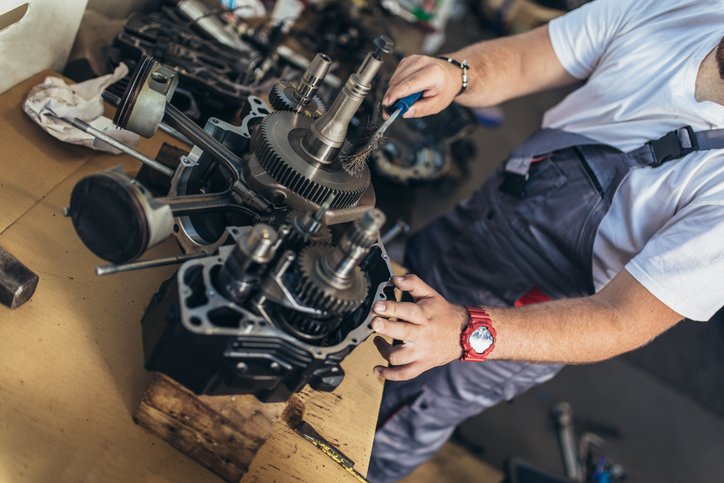
Complete disassembly. Every component — crankshaft, pistons, connecting rods, camshaft(s), valvetrain, cylinder head(s), oil pump, timing components — is cleaned, measured, and assessed against manufacturer tolerances. This is the step that defines the final quote. We find out exactly what needs machining, what can be reused, and what must be replaced. The quote is locked in after teardown assessment — no surprises at collection.

Stage 3 — Machining (Day 3–7)
Components requiring machining — cylinder bores (honed or bored oversize), crankshaft journals (ground to undersize if bearing journals show wear), cylinder head surface (skimmed flat), valve seats and guides — are sent to or processed through our machining facility. Machining restores components to the dimensional accuracy required for correct oil film, compression, and thermal expansion behaviour. This is the difference between a proper rebuild and bolting worn parts back together.

Stage 4 — Parts Procurement (Concurrent with machining)
Rebuild kit components — rings, bearings, gaskets, seals, timing chain or belt kit, water pump, oil pump where required — are sourced to the correct specification for the engine code. Galeeco uses quality OEM-equivalent rebuild kits and genuine parts where OEM is required. We do not use no-name parts on engine rebuilds.

Stage 5 — Assembly (Day 7–12)
Precise assembly to manufacturer specification — bearing clearances measured with plastigage, ring gaps set to specification, head bolts torqued to sequence and spec, timing set precisely. This is skilled work. Engine assembly sequence matters. A builder who skips steps or works to approximate torque values creates an engine that fails within 50,000km of rebuild. Galeeco’s builders work to documented specification, not memory.

Stage 6 — Run-In, Testing, and Reinstallation (Day 12–14+)
The engine runs on a test stand before reinsertion where possible. Oil pressure, coolant temperature, idle quality, and initial compression are verified. The engine is then reinstalled in the vehicle. Post-installation: test drive, oil pressure live check, leak check, and a final diagnostic scan. The vehicle does not leave until it’s right.

Stage 7 — Handover and Break-In Advice
You receive the vehicle with a documented rebuild record — parts used, machining performed, tolerances measured, warranty details. We walk you through the break-in period: the first 1,000km, the first oil change timing, what to avoid during run-in. This is the part most workshops skip. It matters for how long the rebuild lasts.

All Makes and Models We Rebuild

Galeeco rebuilds petrol and diesel engines across the full spectrum of vehicles that Auckland drivers actually own and operate.

Japanese Makes

Toyota — 1KD-FTV (HiLux/Prado diesel), 2KD-FTV (HiLux/Hiace diesel), 1GR-FE (V6 petrol HiLux/Prado), 2TR-FE (HiAce petrol), 2NZ/1NZ series (Corolla/Yaris petrol), 1ZZ/2ZZ (Corolla), 2GR-FE (Camry/Aurion V6). The 1KD-FTV is Galeeco’s highest-volume Toyota rebuild — common rail diesel failure modes on this platform are thoroughly understood.

Nissan — YD25DDTI (Navara/Pathfinder diesel), VQ35DE (Murano/350Z V6), QR25DE (X-Trail petrol), SR20 series (classic Nissan performance). YD25 crankshaft and con-rod bearing failures from oil starvation are one of the most common engine rebuild scenarios in Auckland.

Mazda — WL-T/WL-C (BT-50/Bravo diesel), SH-VPTS (CX-5/6 diesel), PE-VPTS (Mazda3/CX-5 petrol), L3 (Mazda6/MPV). The WL diesel in Mazda BT-50 and older Bravo utes is a robust platform with a long rebuild life when done correctly.

Mitsubishi — 4M41 (Pajero diesel), 4N15 (Triton diesel), 4D56 (classic Triton/Pajero diesel), 6B31 (Outlander/Pajero Sport petrol V6).

Honda — K-series (Civic/Accord petrol), R-series (CR-V petrol), N22A (Accord diesel), F/H/B series (older performance platforms). Honda VTEC engines are precision-built and require a builder familiar with their specific clearance requirements.

Subaru — EJ20/EJ25 (Impreza, Legacy, Forester, Outback). Subaru EJ engine rebuilds are a specialist skill set — head gasket failures, bore distortion, and piston ring land wear are platform-specific failure modes. Galeeco has extensive EJ rebuild experience.

European Makes

Volkswagen / Audi / Skoda / SEAT — 2.0L TDI (Golf, Passat, Tiguan, Amarok, A4/A6/Q5), 1.6L TDI, 3.0L TDI (Touareg, Audi Q7). VW Group TDI diesel rebuilds require VCDS diagnostic capability for post-rebuild adaptation and coding. We have this.

BMW — N47 (318/320d — highly prone to timing chain failure), M47/M57 (3/5 Series diesel), B47 (F30/F10 generation diesel), N52/N54/N55 (petrol 3/5 Series). The N47 timing chain failure is the most common BMW engine failure in Auckland — and one of the most frequently misdiagnosed as requiring a full rebuild when a top-end timing repair suffices.

Mercedes-Benz — OM651 (C/E Class CDI), OM642 (V6 CDI — ML, R-Class), OM611/646/648 diesel. The OM642 V6 diesel is known for intake swirl flap and EGR-related failures in Auckland — Galeeco assesses the full emission system as part of any Mercedes diesel rebuild assessment.

Volvo — D4/D5 diesel (S60/V60/XC60/XC90). Timing belt and balance shaft failures are the primary Volvo diesel rebuild triggers in Auckland.

Land Rover / Range Rover — TDV6 (Discovery 4/Range Rover Sport), 2.7/3.0 TDV6 (Discovery 3). LR diesel rebuilds carry premium parts costs — we quote these honestly.

Korean Makes

Hyundai / Kia — D4CB (iLoad/Starex/Carnival diesel), G4KE/G4KH (Tucson/Sportage petrol), Theta II petrol (Sonata/Optima — note: this engine has a known oil supply deficiency fault that Galeeco identifies and addresses in rebuild specification).

Location, Access, and What to Do Right Now

If Your Engine Has Just Failed

Step 1 — Stop driving it. A knocking, smoking, or no-pressure engine driven further becomes an engine that cannot be rebuilt. The additional damage in the next 10 kilometres can add $2,000–$4,000 to the repair cost or convert a rebuildable engine into scrap.

Step 2 — Call Galeeco. The hotline is 027 734 4445. We’ll ask a few questions and advise whether it’s safe to drive to the workshop or whether you need a tow. If you need a tow, we can advise on towing companies who regularly deliver to our Mt Wellington and Mt Roskill workshops.

Step 3 — Don’t buy parts yet. The fault codes on your dashboard and the symptom you’ve described to someone online are not a diagnosis. A rod knock on a 2.0L TDI might be a bearing or it might be a timing issue generating a similar sound. Spending money on the wrong repair before a proper teardown assessment is common and costly.

The Engine That Failed Today Can Run for Another 200,000km Tomorrow.

Not every failed engine is the end of the car. Not every rebuild is as expensive as the worst-case quotes you’ve seen online. But you won’t know which situation you’re in until someone who actually knows what they’re doing looks inside.

That’s what Galeeco does. Teardown. Assessment. Honest quote. Fixed price. Written warranty.

Two Auckland workshops. Six days a week. One phone call.

MT WELLINGTON
65 Leonard Road, Mount Wellington, Auckland 1060
022 472 4444

MT ROSKILL
87 Carr Road, Mount Roskill, Auckland 1041
022 567 2249

URGENT / HOTLINE
027 734 4445
Mon–Fri 8am–5:30pm | Sat 9am–5pm

Book a Free Engine Assessment →

“The Trusted Name in Auto Repair — We Care About More Than Cars.”

Engine Rebuild Auckland — Questions We're Asked Every Week

How much does an engine rebuild cost in Auckland?

Engine rebuild costs in Auckland range from approximately $3,500 for straightforward small petrol engine rebuilds on common Japanese platforms, to $8,000–$10,000+ for larger or more complex diesel and European engines. The final cost depends on the engine size and type, the extent of internal damage found at teardown, the parts required, and whether machining of the block or crankshaft is needed. Labour in Auckland for specialist engine work typically runs $100–$140 per hour. Galeeco provides a fixed written quote after teardown assessment — the quote does not change once the scope is agreed. A rough bracket can be given at initial consultation, but the final price requires seeing what’s inside the engine.

This is the most important question — and it depends on three things: the cost of the rebuild vs the value of the vehicle, the condition of the rest of the vehicle, and what a replacement vehicle would actually cost you. If your car is worth $8,000 on the market and a rebuild costs $4,500, the rebuild is almost certainly the rational choice — you keep a known vehicle with a fresh engine for half the replacement cost. If your car is worth $3,000 and the rebuild costs $6,000, the economics argue against it. At Galeeco, we give you this analysis plainly before any work is authorised. We have no interest in rebuilding an engine that doesn’t make financial sense for the customer.

A professional engine rebuild at Galeeco takes approximately 2–4 weeks from the time the engine is removed from the vehicle. This includes teardown and assessment (1–2 days), machining (3–5 days at the machining facility), parts procurement (concurrent with machining), assembly (3–5 days), testing, and reinstallation. Simpler rebuilds on well-supported platforms with readily available parts can be completed closer to 2 weeks. Complex European engines or those requiring hard-to-source parts may take 3–4 weeks. Galeeco provides a timeline estimate at the point of quoting and communicates any delays proactively.

The terms are often used interchangeably in New Zealand, but there are meaningful distinctions. An engine recondition typically refers to replacing worn components — bearings, rings, seals, gaskets — and machining the block and head back to specification. An engine rebuild is generally a more comprehensive process that may include replacing hard parts (connecting rods, pistons, camshaft components) as well as reconditioning work. A remanufactured engine goes further — all major components are replaced or machined to new OEM tolerances, often by a specialist facility or the manufacturer. Galeeco performs professional engine rebuilds and reconditions — the scope is determined by what teardown assessment reveals, and you receive a documented record of every component replaced or machined.

The clearest warning signs that an engine may need rebuilding are: a deep, rhythmic metal knocking that speeds up with engine revs (rod bearing failure); constant blue or grey exhaust smoke indicating oil burning; white sweet-smelling exhaust smoke indicating coolant in the combustion chamber; metal particles in the engine oil; a sudden loss of oil pressure; the engine refusing to crank or physically seizing; and significant coolant and oil mixing (brown frothy oil on the dipstick). Not all of these symptoms automatically require a full rebuild — a compression test and cylinder leak-down test at Galeeco will determine whether the issue is top-end (potentially repairable without a full rebuild) or bottom-end (requiring a complete teardown). Do not continue driving on any of these symptoms — additional damage is caused with every kilometre.

Galeeco rebuilds engines across all mainstream makes and models operated in Auckland. For Japanese vehicles: Toyota (including 1KD-FTV HiLux/Prado diesel, 2KD-FTV, 1GR-FE V6), Nissan (YD25, VQ35, SR20), Mazda (WL diesel, SH diesel, PE petrol), Mitsubishi (4M41, 4N15, 4D56), Honda (K-series, R-series), and Subaru (EJ20/EJ25). For European vehicles: Volkswagen/Audi 2.0L and 3.0L TDI, BMW (N47, M57, N52/N54/N55), Mercedes-Benz (OM651, OM642), Volvo (D4/D5), and Land Rover TDV6. Korean platforms including Hyundai/Kia diesel and petrol. Contact Galeeco at 027 734 4445 to confirm availability for a specific engine code.

Galeeco’s Mt Wellington engine rebuild workshop is at 65 Leonard Road, Mount Wellington, Auckland 1060. It is accessible from the Southern Motorway (SH1) via the Mt Wellington Highway interchange and handles all-makes engine rebuild work for customers from Mt Wellington, Penrose, Otahuhu, Onehunga, Pakuranga, Panmure, Avondale, Papatoetoe, and surrounding East and South Auckland suburbs. Phone 022 472 4444. Open Monday–Friday 8am–5:30pm and Saturday 9am–5pm. Tow-in for failed engines arranged directly — call ahead.

Yes. The Galeeco Mt Roskill workshop at 87 Carr Road, Mount Roskill, Auckland 1041 (phone 022 567 2249) performs full engine rebuild work for all makes and models — the same capability as the Mt Wellington branch. The Mt Roskill workshop serves customers from Mt Roskill, Three Kings, Hillsborough, Lynfield, New Windsor, Avondale, and Māngere Bridge, and is accessible from the Southwestern Motorway (SH20) via the Hillsborough Road interchange.

Yes. All Galeeco engine rebuilds come with a written warranty covering the rebuild work — parts and labour. The specific warranty period and terms are discussed at the point of quoting and reflect the scope of the rebuild performed. Galeeco provides a documented rebuild record with every completed engine — recording all components replaced, machining performed, and tolerances achieved — which forms the basis of the warranty claim process should any issue arise. We stand behind our rebuilds.

Yes. Galeeco rebuilds diesel engines for light commercial vehicles — including Isuzu NPR/NLR, Mitsubishi Fuso Canter, Toyota Dyna, and Hino 300 series — as well as diesel utes and larger vans. Fleet operators in Auckland with multiple vehicles or staggered engine failure situations can contact either workshop to discuss a fleet rebuild schedule. Galeeco prioritises turnaround communication for fleet customers — you’ll know the timeline before work starts and be updated at each stage milestone.

great team

Our team of great mechanics and tow truck operators have a combined 20+ years of hands on experience.

amazing results

Every time you put your car in our hands you know you’ll get nothing short of amazing results back.

Competative Pricing

We won’t charge you an arm and a leg to get you back up and running – our rates are very reasonable,

Our
Services

We use state-of-the-art scan tool equipment to perform engine diagnostics and repair. Once we diagnose the problem, we’ll cautiously decide what type of repairs need to be performed. After that, our technicians will discuss this information with you and tell you the total cost of the repairs, that need to be done.

During each step of the repair process, you will be informed by our mechanics. That’s why, if you need engine diagnostics and repair for your vehicle, please call our auto repair shop or schedule an appointment online.

Diagnosing the Issue

When you see the little engine icon that is on your car’s panel, remember not to panic! In most cases, it warns you for non-critical and non-urgent problem. Nevertheless, you are advised not to ignore it, because it might lead to something more serious in future.

If your check engine light is on, just call our auto repair shop and we’ll take care of the problem. Due to the complexity of present-day engines, the problem must by diagnosed by an experienced and skillful technician.

best auto service

RATED ONE OF THE THE BEST AUTO service IN AUCKLAND

Based on customer reviews – 80+ reviews and counting.