Diesel vehicle repairs
DPF, AdBlue & EGR Solutions
Three Letters That Cost Auckland Diesel Drivers Thousands Every Year.
DPF. AdBlue. EGR. One Workshop That Fixes All Three.
You know the signs. A warning light you’ve been ignoring. The car stuck in limp mode on the motorway. Black smoke on acceleration. An AdBlue countdown ticking toward zero. That sluggish, fuel-hungry feeling that wasn’t there 20,000km ago.
Modern diesel emission systems — DPF, AdBlue/SCR, and EGR — are sophisticated, necessary, and genuinely expensive to get wrong. They’re also frequently misdiagnosed, overquoted, and poorly repaired by workshops that treat them as a revenue opportunity rather than a precision diagnostic challenge.
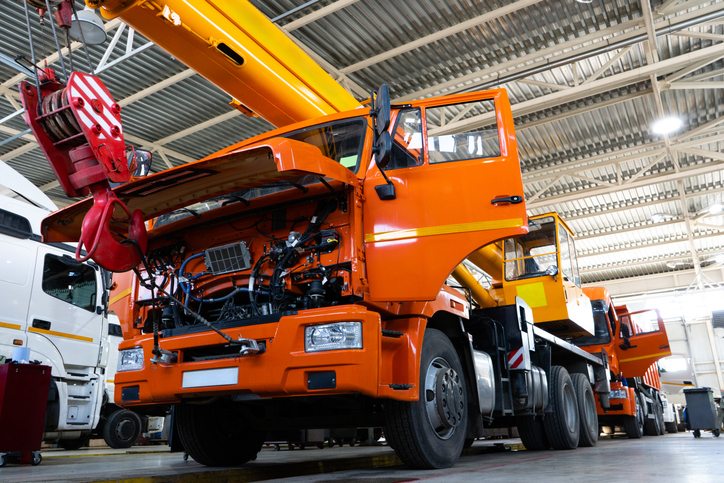

At Galeeco in Mt Wellington and Mt Roskill, we diagnose the root cause before we quote the repair. For every Auckland diesel that comes in with a DPF fault code, we check whether it actually needs cleaning or replacement — or whether the real problem is an EGR valve caking carbon into the intake, a turbocharger underperforming, or a faulty temperature sensor triggering false regeneration failures. We fix what’s wrong. We don’t sell you what’s easiest to replace.
Fixed written quote. Root-cause diagnosis. No limp-mode-to-invoice shortcuts.
Book a Diesel Emissions Diagnostic →
Call 027 734 4445 →
DPF (Diesel Particulate Filter)
What Is a DPF and Why Does It Block?
The diesel particulate filter sits in your exhaust system and traps soot particles produced by combustion. In normal operation, the DPF cleans itself through a process called passive regeneration — a high-temperature burn that converts trapped soot to ash during sustained motorway driving.
The problem for Auckland diesel drivers is obvious: Auckland is not a motorway city. It’s a stop-start, short-trip, suburban-route city. The DPF never gets hot enough, long enough, to complete passive regeneration. Soot accumulates. The DPF blocks. The warning light comes on. Limp mode follows.
This isn’t a design flaw — it’s a mismatch between how modern diesel emission systems were engineered and how Auckland roads work. It affects every diesel ute, van, SUV, and passenger car doing daily Auckland commutes. And it’s entirely manageable with the right diagnostic approach.
The DPF Fault Cascade — Why One Problem Becomes Three
Here’s what Galeeco sees repeatedly with Auckland diesel vehicles: a blocked DPF is rarely the whole story.
Blocked DPF
└─► Limp mode → Engine underperforms → Owner avoids motorway driving
└─► DPF never regenerates → Blockage worsens
└─► Passive regeneration fails completely
└─► Forced regen attempted → fails if EGR or turbo is also compromised
The cascade is real. A DPF that was cleanable at 60% soot load becomes unrepairable at 90%. And the reason it reached 90% was often an EGR valve caking carbon into the intake, reducing airflow and preventing the exhaust temperatures needed for regeneration. Fix the EGR. Clean the DPF. Save $3,000–$6,000 on a premature replacement.
This is why we diagnose before we quote.
DPF Solutions at Galeeco
① DPF Diagnostic Assessment
Full OBD2 scan for DPF-related fault codes, soot load percentage reading, DPF differential pressure sensor check, exhaust temperature sensor assessment, and turbo/EGR evaluation to identify contributing causes. The diagnostic cost is credited against repair work where work proceeds.
② Forced Regeneration (Active Regen via Diagnostics)
When the DPF is moderately blocked and the vehicle’s automatic regen cycle has failed, a forced regeneration via specialist diagnostic software can clear the blockage without removal. Works on vehicles where soot load is elevated but below the threshold where removal is required — typically below 80% soot load. This is the lowest-cost resolution and the first option we explore.
③ Professional DPF Cleaning (Off-Vehicle)
Where forced regen isn’t sufficient, the DPF is removed and sent for professional ultrasonic/pneumatic cleaning at a specialist facility. This restores DPF flow to approximately 95–98% of original specification at a fraction of replacement cost. Turnaround: 2–4 working days including removal, cleaning, reinstallation, and post-install verification. This is the right answer for most Auckland DPF blockage cases.
④ DPF Replacement
When a DPF is structurally damaged, cracked, or has been blocked beyond the point where cleaning restores adequate flow — confirmed by post-clean pressure testing — replacement is the correct path. We specify genuine OEM or quality OEM-equivalent units. The receiver-drier and relevant sensors are replaced at the same time. We don’t recommend replacement before cleaning has been attempted and proven insufficient.dpfcleaner+1
⑤ DPF Cleaning & ECU Remapping
A blocked DPF is fixable without deletion. We carry out full DPF diagnostics, professional cleaning, and root cause repair for diesel vehicles — keeping your vehicle WoF and CoF compliant. We also offer ECU remapping for fuel economy, performance, and load optimisation on diesel trucks and commercial vehicles. Any remap we carry out is appropriate for road-registered use in New Zealand. If it isn’t compliant, we’ll tell you before we touch it.
Most Common DPF Faults We Diagnose in Auckland
Fault Code / Symptom | Most Likely Cause | Galeeco’s First Diagnostic Step |
DPF warning light + limp mode | Soot overload — regen failure | Soot load % check via OBD2 |
Repeated regen failures | EGR or turbo underperformance | EGR valve carbon check |
Black smoke under acceleration | Injector fault or DPF bypass | Injector contribution test |
Loss of power + high fuel use | Partially blocked DPF | Differential pressure test |
AdBlue warning appearing with DPF fault | SCR catalyst contamination | Combined emissions diagnostic |
DPF light off but smell of exhaust in cabin | DPF crack or bypass | Physical inspection + pressure test |
AdBlue & SCR System
What Is AdBlue and Why Does Your Diesel Need It?
AdBlue — also called Diesel Exhaust Fluid (DEF) or referred to by the system name SCR (Selective Catalytic Reduction) — is a urea-and-water solution injected into the exhaust stream of modern diesel vehicles to convert harmful nitrogen oxides (NOx) into harmless nitrogen gas and water vapour.
It’s required on most diesel vehicles produced from approximately 2015 onwards — and is standard on virtually all new diesel passenger cars, utes, trucks, and commercial vehicles sold in New Zealand today. Without it functioning correctly, the vehicle will not meet emissions standards, and most modern vehicles are programmed to progressively limit engine power and eventually prevent starting if AdBlue is critically low or the SCR system has a fault.
In practical Auckland terms: an AdBlue warning is not something to park in the “deal with later” pile. The countdown to power limitation is real, and the cost of an SCR system fault caused by contaminated AdBlue or a failed injector is significantly higher than a timely top-up or sensor replacement.
AdBlue / SCR System Problems — What We Fix
Low AdBlue Level Warning
The simplest issue: top up the AdBlue reservoir with quality ISO 22241-compliant fluid. The wrong fluid — or contaminated fluid from a poorly stored container — causes crystallisation in the SCR injector and pump, turning a $40 top-up into a $600–$1,500 repair. At Galeeco, we use quality AdBlue only and check reservoir condition during top-up.
AdBlue Quality / Contamination Warning
If the vehicle’s NOx sensor detects that the AdBlue isn’t reducing NOx adequately, it flags an AdBlue quality fault. Causes include: contaminated AdBlue, low urea concentration from improper storage, or water ingress into the AdBlue tank. We drain the tank, flush the system, and refill with verified-quality fluid. If crystallisation has already occurred in the injector or pump, those components are assessed and replaced as needed.
SCR Injector Failure or Blockage
The AdBlue injector sprays DEF fluid into the exhaust stream. It is vulnerable to crystallisation from contaminated fluid or infrequent use, and to heat-related seizure in high-exhaust-temperature applications. We diagnose injector function, clean or replace the injector, and flush the associated lines.innochill+1
AdBlue Pump Failure
The pump pressurises and circulates the AdBlue through the SCR system. Crystallisation from contaminated fluid is the most common failure cause. Pump replacement combined with system flush and fresh AdBlue resolves most pump-related SCR faults.
NOx Sensor Failure
NOx sensors monitor exhaust NOx levels before and after the SCR catalyst. A failed NOx sensor triggers SCR system warnings even when the AdBlue and SCR catalyst are functioning correctly. We test NOx sensor output, identify genuine sensor failure vs SCR system failure, and replace faulty sensors to the correct specification.
SCR Catalyst Degradation
The SCR catalyst itself can degrade over time — particularly in vehicles that have run on contaminated AdBlue or have had chronic SCR system faults. We assess catalyst conversion efficiency via exhaust gas analysis and advise on catalyst replacement where efficiency has degraded below threshold.
EGR (Exhaust Gas Recirculation)
What Does the EGR Valve Do — and Why Does It Fail?
The EGR (Exhaust Gas Recirculation) valve recirculates a portion of the exhaust gas back into the engine’s intake manifold. This lowers combustion temperatures, which reduces the formation of nitrogen oxides (NOx) — a key emissions target under NZ emissions standards.
The problem: diesel exhaust gas carries soot, oil vapour, and carbon deposits. Over time — and faster in stop-start Auckland urban duty cycles — those deposits build up on the EGR valve and the intake manifold walls. A partially seized EGR valve can’t regulate properly. A fully blocked intake manifold starves the engine of air. The engine loses power, burns more fuel, produces more smoke, and triggers fault codes that look — to an inexperienced technician — like a DPF or turbo problem.
EGR faults are one of the most frequently misdiagnosed diesel issues in Auckland. The fault code points to DPF performance. The cause is EGR carbon buildup. The wrong fix gets quoted. The real problem remains.
EGR Faults We Diagnose and Fix
Carbon Buildup — EGR Valve and Intake Manifold
The most common EGR issue. Carbon deposits partially or fully block the EGR valve, prevent it from closing completely, or coat the intake manifold walls until airflow is significantly restricted. Symptoms: poor idle, loss of power, excessive smoke, high fuel consumption, rough running under load. We remove and clean the EGR valve and intake manifold, or replace the valve where cleaning isn’t sufficient to restore correct function.
EGR Valve Failure — Mechanical or Electronic
Mechanical EGR valves (common on older diesel platforms) fail through carbon seizure. Electronic EGR valves (most modern diesel cars and utes) can fail through actuator failure, position sensor fault, or solenoid failure — independently of carbon buildup. We diagnose whether the valve is a carbon issue or an electrical failure before quoting parts.
EGR Cooler Failure
The EGR cooler cools the recirculated exhaust gas before it re-enters the intake. Coolant leaks within the EGR cooler can cause white smoke, coolant loss, contaminated intake air, and in severe cases, hydrolock risk. We assess EGR coolers as part of any EGR diagnostic — this is a less common but more severe failure mode that many workshops miss.
Intake Manifold Decoking
Where EGR-deposited carbon has coated the intake manifold walls, manifold decoking — chemical or mechanical removal of carbon deposits — restores correct airflow to the engine. On high-mileage Toyota HiLux 1KD-FTV, Ford Ranger 3.2L, and Nissan YD25 engines in particular, intake decoking can produce a dramatic improvement in power and fuel economy without a single major part being replaced.
THE SYSTEM VIEW — WHY DPF, EGR, AND ADBLUE MUST BE DIAGNOSED TOGETHER
These Systems Don’t Fail Independently. They Fail Each Other.
This is the diagnostic reality that separates a specialist workshop from a general mechanic with a parts cannon:
DPF ↔ EGR ↔ AdBlue/SCR are an interconnected emission control system. A fault in one component cascades into the others.
A coked EGR valve restricts intake airflow → combustion temperatures drop → DPF regeneration temperatures aren’t reached → DPF blocks → vehicle goes into limp mode → fault code reads as DPF fault → workshop replaces DPF → EGR is still blocked → new DPF blocks within 20,000km. The $5,000 repair that didn’t fix the problem.
A blocked DPF forces the engine to work harder → exhaust temperatures rise → EGR cooler is heat-stressed → EGR cooler develops a coolant leak → white smoke + coolant loss diagnosed as head gasket → expensive misdiagnosis.
Contaminated AdBlue damages the SCR injector → NOx levels rise → the ECU interprets this as DPF under-performance → DPF fault codes appear despite the DPF being fine → DPF cleaned unnecessarily → SCR issue remains unresolved.
At Galeeco, every diesel emissions job starts with a full three-system diagnostic — DPF, EGR, and AdBlue/SCR assessed together. Because fixing the symptom without finding the cause is just a more expensive way to break down again.
Who This Affects in Auckland — Real Vehicle Examples
Toyota HiLux 1KD-FTV / 2KD-FTV (2005–2015)
The pre-DPF HiLux is exempt from DPF issues, but the EGR valve and intake manifold carbon buildup is endemic on these engines in Auckland urban use. Power loss, rough idle, and excessive smoke at 150,000–200,000km is almost always EGR-related. Intake decoke + EGR clean is the standard Galeeco resolution.
Ford Ranger 3.2L (PX1, PX2)
The 3.2L Ranger’s DPF is undersized for its engine and particularly prone to blocking in Auckland’s urban duty cycles. EGR valve carbon buildup contributes significantly to DPF regeneration failures on this platform. We assess both the DPF and EGR on every Ranger 3.2L that presents with limp mode.
Ford Ranger 2.0L Bi-Turbo (PX3)
The 2.0L Bi-Turbo Ranger uses a more complex DPF/SCR system combining DPF and AdBlue/SCR in a single aftertreatment unit. Faults in this system are more complex to diagnose and require specialist scanner access. Increasingly common in our Auckland workshop as the PX3 fleet ages.
Volkswagen Amarok 2.0L TDI
The Amarok’s EGR system is particularly vulnerable to carbon buildup in stop-start use. The DPF on the 2.0L TDI is appropriately sized for the engine but fails from EGR-related causes. We carry VW-specific VCDS diagnostic tooling for precise fault code reading on Amarok emissions systems.
Isuzu and Mitsubishi Fuso Light Trucks
Commercial light trucks doing Auckland urban delivery routes are among the worst-affected vehicles for DPF blockage. Short trips, cold starts, and constant load cycling prevent passive regeneration. Fleet operators running Fuso Canters or Isuzu NPRs in Auckland typically need DPF services every 60,000–80,000km if the fleet runs predominantly urban routes.
BMW, Mercedes-Benz, and Audi Diesel
European diesel cars — including BMW 3/5 Series diesels, Mercedes C/E Class CDI, and Audi A4/A6 TDI — have sophisticated DPF/AdBlue/SCR systems that require manufacturer-specific diagnostic tools to read correctly. We carry the diagnostic capability for these platforms and diagnose them to the same standard as VW Group vehicles.
DPF, AdBlue and EGR Solutions
DPF Diagnostics
We use advanced diagnostic tools to identify:
- Blocked or restricted DPF
- Faulty sensors
- Poor regeneration cycles
- Exhaust leaks affecting DPF performance
DPF Cleaning
Restore performance with:
- On-vehicle forced regenerations
- Off-vehicle DPF cleaning
- Ash & soot removal
- Flow testing before and after cleaning
DPF Repairs & Replacement
We carry out:
- Sensor replacement (pressure, temperature, NOx)
- Exhaust repairs
- DPF reconditioning or replacement
- Regeneration fault correction
DPF Repairs & Replacement
We carry out:
- Sensor replacement (pressure, temperature, NOx)
- Exhaust repairs
- DPF reconditioning or replacement
- Regeneration fault correction
AdBlue System Diagnostics
We diagnose and repair:
- Faulty NOx sensors
- AdBlue pump or injector issues
- SCR catalyst problems
- Crystallisation blockages
- Communication and control module faults
AdBlue System Maintenance & Repairs
Our services include:
- Pump cleaning or replacement
- Injector service
- Line flushing
- SCR system inspection
- Emission compliance verification
All repairs follow emissions-compliance guidelines.
EGR Performance Diagnostics
We check for:
- Sticking EGR valves
- Carbon build-up
- Flow issues
- Sensor and actuator faults
- Cooler leaks
EGR Cleaning & Repairs
Our services include:
- Professional EGR valve cleaning
- Cooler cleaning or replacement
- Pipe and sensor repairs
- Gasket replacements
- System recalibration following repairs
A clean and functional EGR system improves fuel economy, reduces emissions, and restores engine performance.
TWO WORKSHOPS. ONE SPECIALIST TEAM.
Where to Find Us in Auckland
MT WELLINGTON — East & South Auckland
65 Leonard Road, Mount Wellington, Auckland 1060
022 472 4444
Accessible from the Southern Motorway (SH1) via the Mt Wellington Highway interchange. Serving diesel vehicle owners from Mt Wellington, Penrose, Otahuhu, Onehunga, Pakuranga, Panmure, Avondale, Papatoetoe, and Manukau. Full diesel diagnostics including VCDS for VW Group vehicles. DPF removal and reinstallation capability in-house.
MT ROSKILL — West & South-West Auckland
87 Carr Road, Mount Roskill, Auckland 1041
022 567 2249
Accessible from the Southwestern Motorway (SH20) via the Hillsborough Road interchange. Serving diesel owners from Mt Roskill, Three Kings, Hillsborough, Lynfield, New Windsor, Avondale, and Māngere Bridge. Same diesel emissions diagnostic capability and parts access as Mt Wellington.
Both workshops open Mon–Fri 8am–5:30pm, Sat 9am–5pm.
Emergency limp mode / same-day booking: 027 734 4445
Custom Maintenance Programs for All Diesel Vehicles
We tailor service schedules for
Trucks (light-, medium-, and heavy-duty)
Commercial vans
Utes and work utilities
Buses and passenger transport vehicles
Specialty diesel vehicles and equipment
We also offer service reminders, digital records, and fleet reports to keep maintenance organized and stress-free.
great team
Our team of great mechanics and tow truck operators have a combined 20+ years of hands on experience.
amazing results
Every time you put your car in our hands you know you’ll get nothing short of amazing results back.
Competative Pricing
We won’t charge you an arm and a leg to get you back up and running – our rates are very reasonable,
Essential Engine Care
Our Bronze Service gives your engine the fundamental care it needs to stay smooth, clean, and reliable. We use high-quality premium oil, replace the oil filter, and inspect key items like air filters, belts, coolant, and brake fluids to maintain optimal performance.
With these essential checks, your engine runs cooler, lasts longer, and performs better every day. It’s the ideal service to protect your vehicle’s most important components without overpaying.
Safety & Mechanical Checks
Beyond the engine, we provide a thorough safety and mechanical inspection to ensure your vehicle is road-ready. Our technicians examine brake pads, brake discs, suspension points, transmission fluids, differential fluids, and power steering health.
We also check lights, wipers, visibility systems, seat belts, tyres, and all basic safety features. This all-round premium check gives you confidence and peace of mind every time you drive.
best auto service
RATED ONE OF THE THE BEST AUTO service IN AUCKLAND
Based on customer reviews – 80+ reviews and counting.